
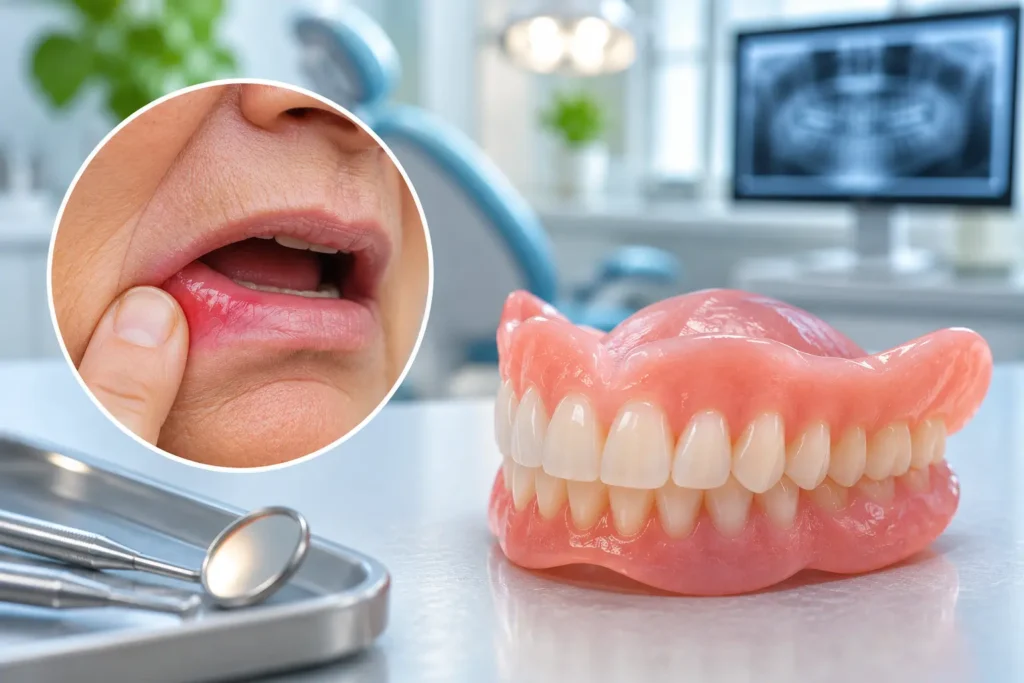
A denture that fit well on day one can start to feel different over time. Maybe it shifts when you talk, clicks when you chew, or leaves a tender patch on your gums by the end of the day. Many denture wearers in Manchester, CT go through this, and the good news is that most fit problems can be corrected once a dentist looks at them.
This guide explains how to recognise an ill-fitting denture, why it happens, what you can do in the meantime and what we do at Manchester Dental Arts to get you comfortable again.
What Are the Signs That Your Denture No Longer Fits Properly?
A well-fitting denture should feel stable and comfortable enough that you can eat, speak and smile without thinking about it. These are the common signs that something has changed:
- The denture slips or lifts when you talk, laugh or eat.
- You notice sore spots, red patches or small ulcers on your gums or the roof of your mouth.
- Food gets trapped under the denture more than it used to.
- You find yourself avoiding certain foods because chewing feels unstable.
- You need to use more adhesive than before to keep it in place.
- Your cheeks or lips look slightly different, or your bite feels off.
- Your speech sounds different, with whistling or slurring that was not there before.
Any one of these is a good reason to book a visit. A denture should not rub, and discomfort is not something you simply have to put up with.
Why Do Dentures Stop Fitting Over Time?
Your denture is made to match the shape of your gums and jaw at a particular moment. Your mouth, however, keeps changing. The gum tissue and the bone underneath can gradually reshape after teeth are lost, which means the space the denture sits on is no longer quite the same. A denture that once hugged your gums closely can start to move.
Other things can play a part as well. Everyday wear affects the teeth and base of the denture. A denture can crack or chip if it is dropped or if you bite on something hard. A new denture placed after extractions can also need a few adjustments as your gums settle, which is why follow-up visits are part of the process.
If you have a partial denture, a change in your remaining natural teeth, such as a tooth that has been filled, crowned or lost, can change how the clasps and base sit.
Why Should You Not Ignore Sore Spots?
It is tempting to wait and hope a sore spot settles by itself, but a denture that keeps rubbing the same place can irritate the tissue underneath. Constant pressure or movement can lead to ulcers and make it harder to wear the denture at all. Irritated gum tissue is also more likely to become inflamed, which makes the problem worse.
If a sore spot is not improving, is getting larger, or you notice swelling, a bad taste or a patch that does not seem to heal, please contact us rather than waiting. Soreness that lingers needs to be properly evaluated.
What Can You Do While You Wait for an Appointment?
These simple steps can make things more comfortable until we see you:
- Give your gums a rest. If a spot is sore, take the denture out for a while when you are at home so the tissue can calm down. Your dentist can tell you how long it is reasonable to go without it.
- Rinse gently. A rinse with warm salt water can feel soothing. Use about half a teaspoon of salt in a cup of warm water.
- Choose softer foods. Cut food into smaller pieces, chew on both sides and avoid very hard, sticky or crunchy items.
- Keep the denture clean. Clean it as your dentist has directed, using products made for dentures instead of abrasive household cleaners.
- Do not try to fix it yourself. Bending a clasp, filing the base or using household glue can damage the denture and your gums. A repair that looks small can turn into a replacement.
Denture adhesive can offer short-term comfort, but it is not a lasting solution for a denture that no longer fits. If you are relying on more and more adhesive, that is a sign the denture needs attention.
How Do We Fix an Ill-Fitting Denture?
The right fix depends on what is causing the problem. At your visit we look at the denture itself, the health of your gums, the bone support and your bite. We also ask you about when the problem happens, whether while eating, speaking or throughout the day.
From there, the options can include:
- Adjustments to relieve a pressure point or improve how the denture sits.
- Repairs if the denture has cracked, chipped or lost a tooth.
- Refitting the base so it follows the current shape of your gums more closely.
- A new denture when the existing one has worn or your mouth has changed too much for it to be corrected.
Dentures have no guaranteed lifespan. Normal wear and changes in the gums and bone mean they need to be checked from time to time, so regular visits help us catch small fit problems before they become uncomfortable ones.
When Is It Time to Think About a Different Type of Denture?
If you have been struggling with movement for a while, it may be worth looking at other options. Our denture services include complete dentures for a full arch, partial dentures that fit around your remaining teeth and removable options. We also offer custom-designed dentures made around your individual anatomy, bite and appearance, which you can read about on our specialty dentures page.
Some patients also ask about dental implants to add stability. A traditional denture rests on the gums, while implants are placed in the jawbone and can support an implant-supported denture, which tends to move less when you eat and speak. Whether implants are suitable depends on your oral health, jawbone, medical history and ability to keep the area clean, and Dr. Shah can go through this with you at a consultation.
How Can You Help Your Denture Fit Well for Longer?
- Clean your denture every day as your dentist has instructed.
- Avoid using your teeth to open packages or to chew very hard items.
- Follow the guidance you were given about wearing your denture overnight.
- Keep brushing your gums and any natural teeth you still have.
- Book regular check-ups so any change in fit is picked up early.
- Bring the denture with you to every visit, even when it feels fine.
Why Choose Manchester Dental Arts for Denture Care?
Our team takes the time to listen to what is bothering you, look at your denture and your mouth and explain the options before anything is done. Dr. Tushin Shah is known by patients for being thorough and calm, and for explaining each step clearly. Whether you need a quick adjustment or a conversation about replacing your denture, we will find a comfortable way forward.
Book a Denture Visit in Manchester, CT
If your denture is rubbing, slipping or making eating harder than it should be, please do not wait for it to get worse. Call us at (860) 643-0688 or send us a message to book an appointment at our office at 229 E Center St, Manchester, CT. We are open Monday to Friday, 8 am to 5 pm.
Frequently Asked Questions About Ill-Fitting Dentures
Is it normal for new dentures to feel uncomfortable at first?
Some adjustment time is normal. Softer foods, smaller bites and speaking aloud can help you get used to a new denture. If you have a sore spot that keeps coming back, it needs to be checked and adjusted, so please come in for a follow-up visit.
Can a loose denture be tightened?
In many cases, yes. Depending on the cause, a dentist may adjust the denture, repair it or refit the base so it follows your gums more closely. The right option depends on the condition of the denture and your mouth.
Is it safe to use denture adhesive every day?
Adhesive can give short-term comfort, but needing it more and more is a sign that the denture has stopped fitting well. It is best to have the fit checked rather than relying on adhesive to hide the problem.
Why do my gums hurt even though my denture is fairly new?
Gums and bone can keep changing after teeth are removed, especially in the first stage of healing. A small adjustment is often all that is needed, which is why follow-up visits are part of getting a denture.
How often should dentures be checked?
Dentures have no guaranteed lifespan, and the fit can change as your gums and bone change. Regular check-ups let us spot wear or fit problems early and decide whether an adjustment, repair or replacement makes sense.
Can I fix a cracked denture at home?
We would advise against it. Household glue and DIY fixes can damage the denture and irritate your gums. Please keep the pieces and bring them in so we can repair or replace it properly.